
Newsletters
New Legislation and 10-Year Anniversary Highlights of Gun Violence Restraining Orders
The California State Legislature has enacted new legislation, now in effect as of 2026, to guide law enforcement and ensure greater consistency in Gun Violence Restraining Order (GVRO) practices statewide. In addition, California’s Department of Justice recently released a progress report highlighting the implementation and impact of this lifesaving law across the state. Learn more below.
Legislative Updates
New legislation in effect as of 2026 reinforces the need for consistent, statewide use of Gun Violence Restraining Orders (GVROs) and underscores the importance of expanding public awareness across California communities. In support of these updates, the California Department of Justice has issued formal advisory notices to law enforcement agencies, city attorneys, and county counsel outlining revised policies, standards, and procedures to guide GVRO implementation.
Assembly Bill 2621 (2024, Gabriel) requires law enforcement agencies to update their existing GVRO policies to reflect numerous changes to laws governing the GVRO process, address common implementation barriers, and provide more comprehensive guidance about specified topics, including about the types of circumstances in which officers should consider requesting GVROs or other safety interventions; the types of evidence courts may consider in GVRO cases; and the process required to obtain a longer-term GVRO after a hearing or consent that lasts for up to five years instead of expiring within 21 days. Learn more about AB 2621 here.
Assembly Bill 451 (2025, Petrie-Norris) mandates a January 1, 2027 deadline for California law enforcement agencies to develop and implement new agency policies and procedures to promote agency compliance with laws governing service, implementation, and enforcement of all court protection and restraining orders that include firearm prohibitions, including, but not limited to, GVROs. Learn more about AB 451 here.
Senate Bill 899 (2024, Skinner and Blakespear) strengthens California’s protection order laws and procedures surrounding firearm relinquishment for individuals in crisis. The bill requires courts issuing protection orders to provide respondents with information on how any firearms or ammunition still in their possession are to be relinquished. The bill allows warrants to include firearms and ammunition prohibited under protective orders, strengthening enforcement and improving compliance with relinquishment requirements. The bill also requires courts to review the respondent’s file to determine whether the receipt has been filed and inquire as to whether the person has complied with the requirement. Learn more about SB 899 here.
GVRO 10-Year Progress Report
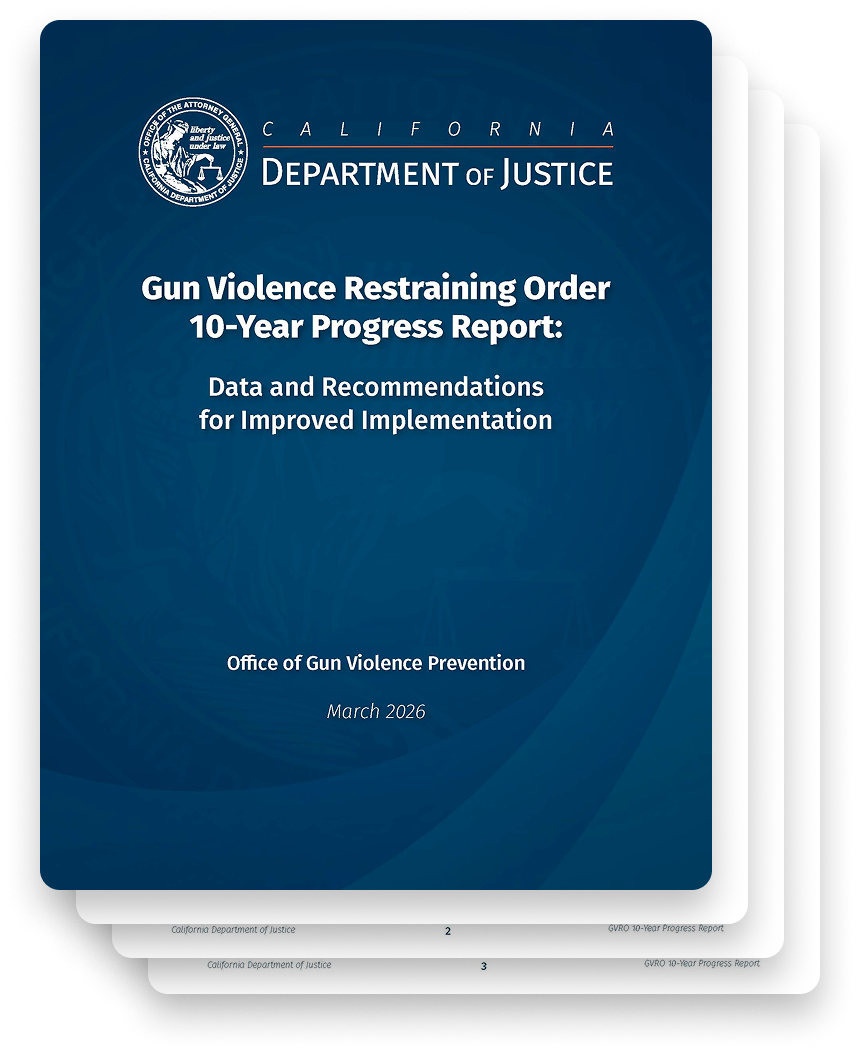
On March 19, the California Department of Justice announced the release of a 10-year progress report analyzing data and research on GVROs in California. The report provides demographic and trend data on GVROs issued statewide, highlighting the successful impact of local GVRO programs. It also shows increased use since 2021 and identifies key recommendations to improve GVRO implementation.
According to the new report:
- California’s GVRO laws have helped to prevent dozens of potential mass shootings and have saved countless lives.
- In 2024 alone, California courts issued GVROs to 1,727 individuals found to pose a significant danger of firearm violence toward themselves or others.
- Since 2021, the number of longer-term GVROs issued per year in California has increased by about 30% each year, more than doubling between 2021 and 2024, and increasing by 67% between 2022 and 2024.
- 99% of GVROs were obtained by law enforcement petitioners.
- In 2024, at least one GVRO was issued in 41 of California’s 58 counties.
A Model GVRO Policy for California Law Enforcement
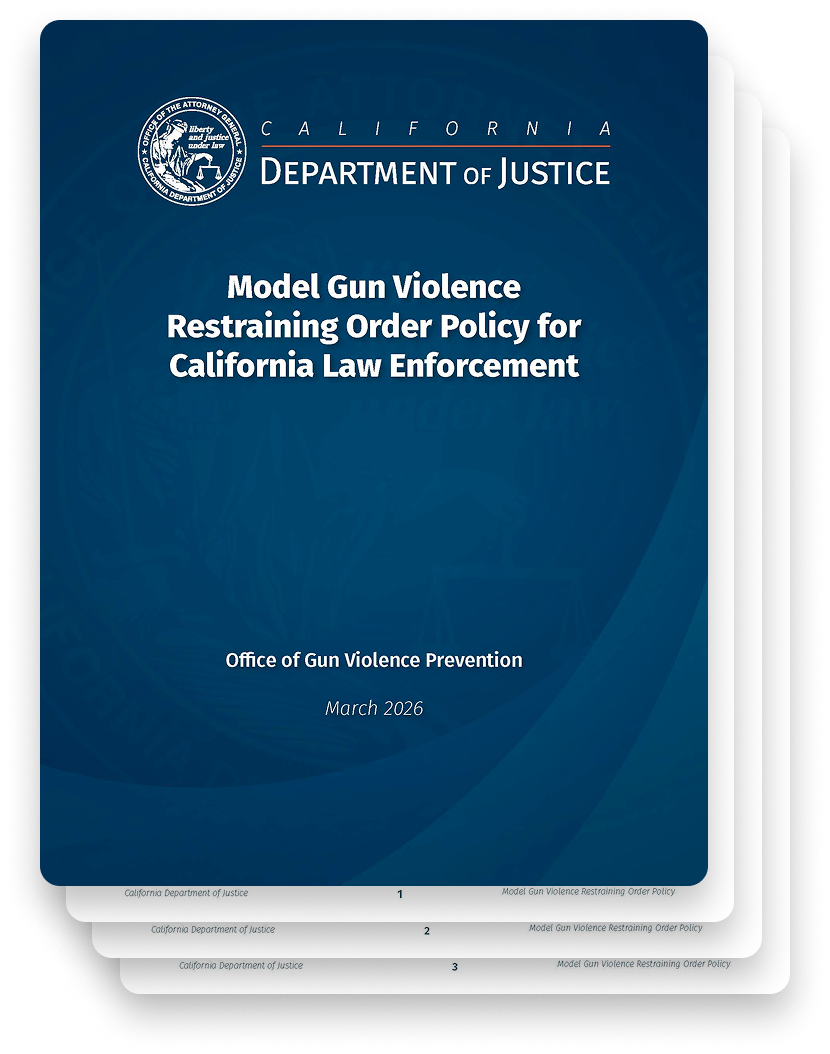
To help law enforcement agencies comply with new mandates and promote effective use of GVROs, the Department of Justice has issued a Model GVRO Policy for California Law Enforcement. The model provides guidance on when officers should consider requesting a GVRO or other safety intervention, the types of evidence courts may consider, and the process for obtaining all three types of GVROs (Temporary GVROs, Emergency GVROs, and longer-term GVROs After a Hearing or Consent). Law enforcement agencies are encouraged to adapt this model to provide more specific guidance tailored to their agencies and communities.
Highlights include:
- Considerations for requesting a GVRO or pursuing other safety interventions
- Relevant evidence in GVRO cases
- Serving GVROs
- The firearm relinquishment process
Preparation for the GVRO hearing - Storing and releasing relinquished items
A GVRO Implementation Guide
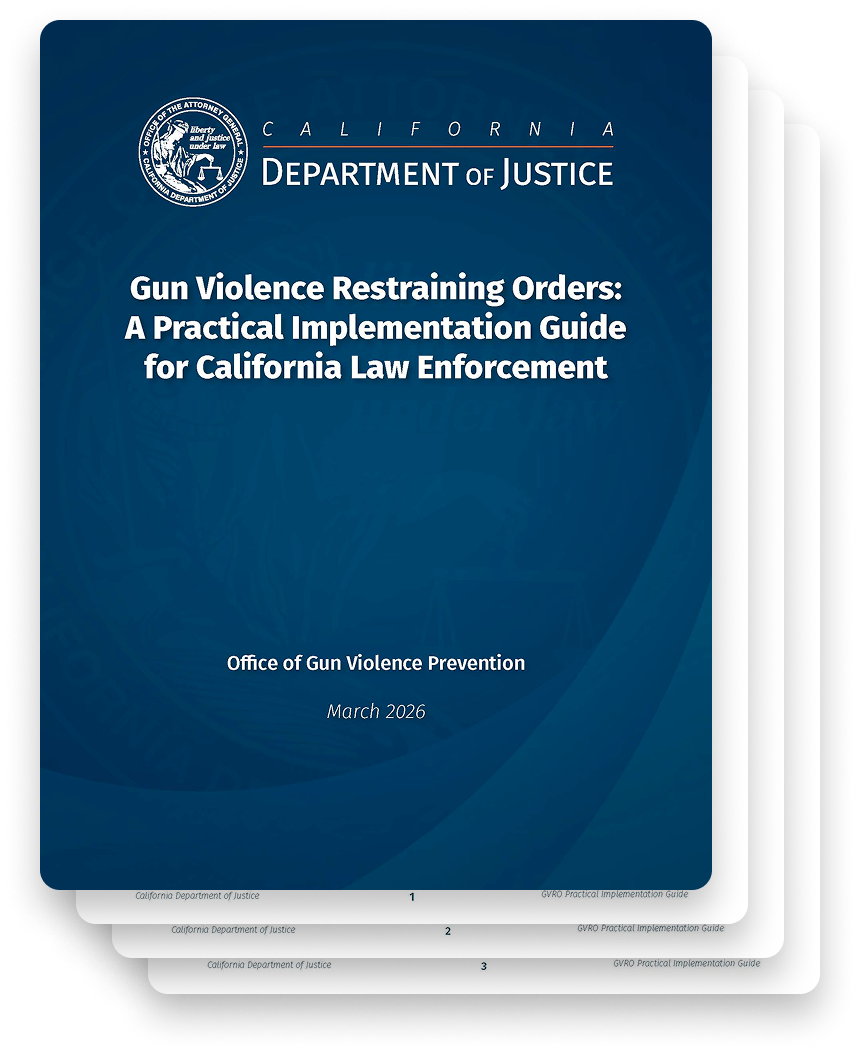
The Department of Justice also released a GVRO Implementation Guide that provides a more comprehensive overview for agency leadership, legal counsel, and GVRO coordinators about the GVRO process. The GVRO Implementation Guide includes explanatory background, GVRO process flow charts, and best practice checklists to help agencies develop subject matter expertise in the GVRO process, identify and develop GVRO cases informed by behavioral threat assessment and management strategies, evaluate additional and alternative safety interventions, and petition for, serve, document, and enforce all three types of GVROs when necessary.
Share Information About Protection Orders With Your Community!
Reduce the Risk has published resources for Californians who are interested in learning more about protection orders. Please share these resources with others in your organization or community to help them learn about the power of protection orders.
To download materials, visit our website or contact us at ReduceTheRisk@caloes.ca.gov for more information.